Development Update 10/25/2025
Engine tuning, flight model refinements, first autopilot testing, and VNAV progress.
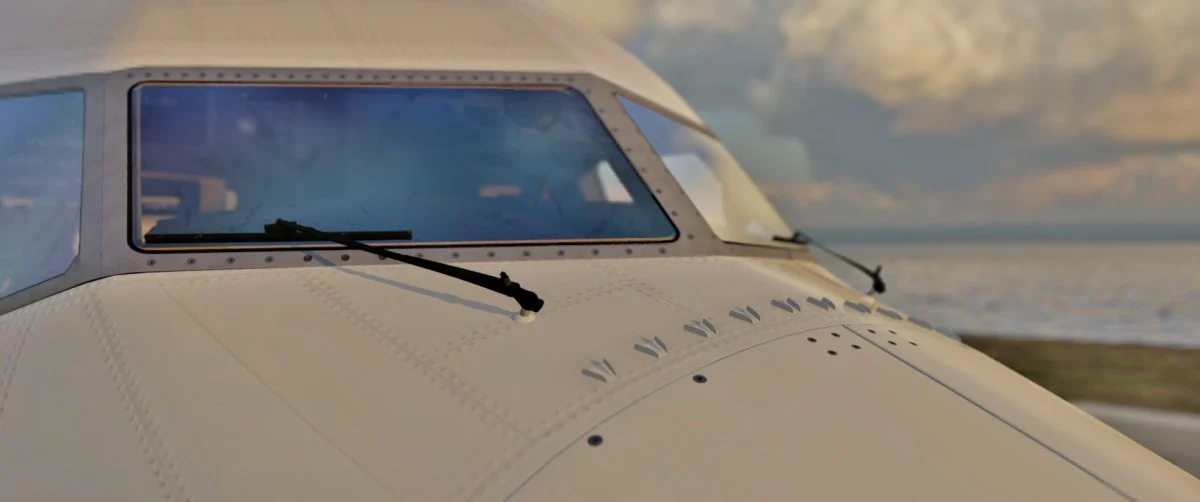
We're back with a focused progress report on the AFL 737 MAX for X-Plane 12. This one zeroes in on engine tuning, the core flight model, autopilot hooks into the new FMS logic, and a round of 3D/window work. As always, we're keeping it practical and pilot-facing so you can see precisely what's improving in the flight deck.

Airfoillabs Team
Engine Tuning
Engines are now tuned in much more detail than before, and we've implemented new data from real pilot reports regarding engine behavior. We tuned acceleration and deceleration of engine RPM and, most importantly, performance as a function of Mach, altitude, and airspeed. We also completed the EEC logic with failure modes. Final calculations for N1-driven autothrottle modes are in, with MCT, TO, CLB, and GA modeled in detail. Idle modes are fully functional: ground idle, flight idle, approach idle, etc. We also corrected N2 values to match the real aircraft.
Flight Model
We tuned all airfoils and wings again for precise performance across altitude, weight, attitude, and speed relationships, reflecting the clean-aircraft performance in climb, cruise, and descent, including pitch trimming. The aim is to test vertical performance with the FMS. We are currently tuning the flight spoilers, flaps, and slats to finalize takeoff, approach, and landing behavior.
Autopilot
We've spent substantial time tuning the autopilot to the point where we can begin testing it with the new FMS functionality. Basic modes are working, and flight behavior is satisfactory. That said, a lot of work remains to implement the many interactive autopilot modes - only the basic ones are currently available.
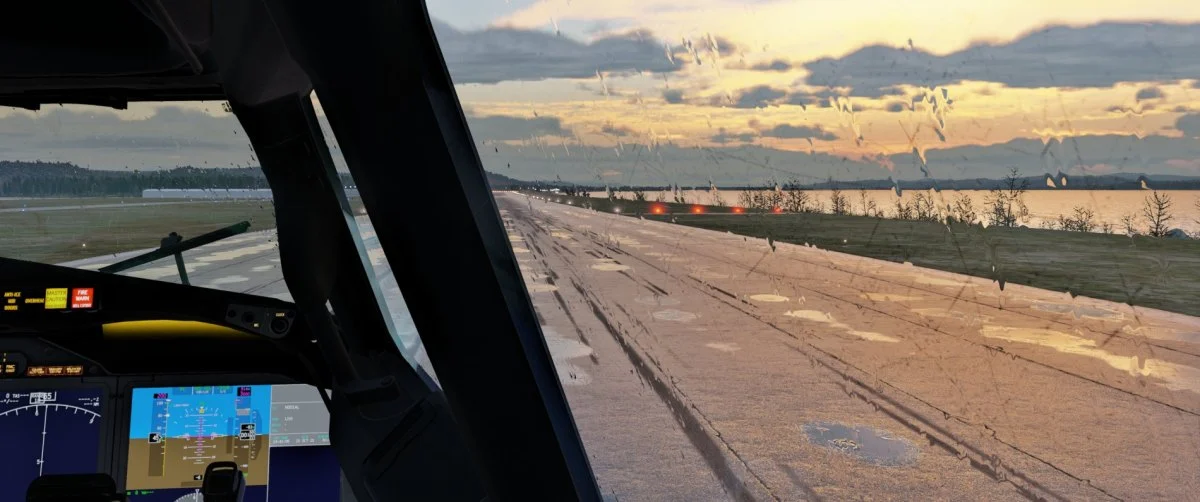
3D Modeling: Glass and Windows
We've been working on the glass and all windows, including rain/icing effects, thermal features, and wipers. Significant time was spent correcting cockpit window meshes and creating new textures - this had been done rather superficially and needed many interventions - but that part is now finished: all glass-to-frame connections are done. The side-panel and ceiling meshes were edited too to fit the windows correctly. We will postpone the side-window animations.
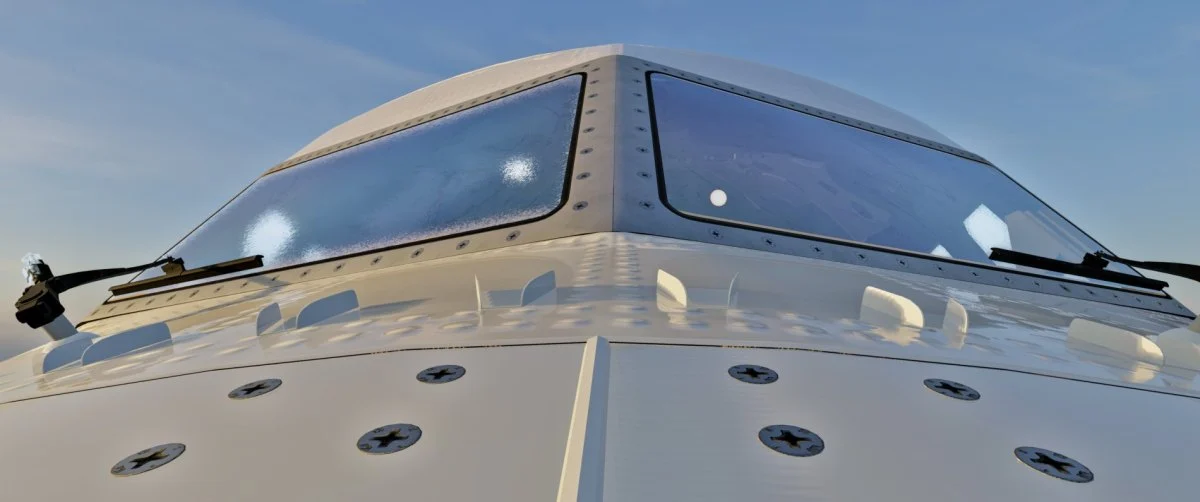
3D Modeling: Fuselage, Compass, and Cabin
We have also created the analog compass and reworked the fuselage textures, improving the representation of the bolts (they were too large). New normal maps were created for this, and effects for dirt blown by airflow around the bolts were added. As there's currently no time to make the full cabin interior, a dummy cabin is in place so sunlight can pass through and night-lighting effects can be achieved.

FMS: VNAV Performance and Restrictions
VNAV Performance Engine (Climb, Acceleration, Level Flight) - In Progress
Climb profiles (ECON / Max Rate / Max Angle / RTA): we compute target speeds, thrust modes, and altitude captures through the VNAV CLB model, including acceleration segments and speed schedules from lift-off through clean-up to top-of-climb. This mirrors the real aircraft's FMC climb logic (e.g., CLB, RTA CLB, Altitude/Speed Intervention).
Acceleration handling: the calculation transitions from takeoff/clean-up speeds to climb IAS/Mach, observes the IAS/Mach crossover, and preserves published or pilot-entered restrictions during the clean-up window - consistent with how real-world 737 crews describe climb and initial-climb handling.
Level-flight (cruise) stability WIP: we calculate FMC targets for ECON/LRC/RTA cruise, including Mach/IAS propagation and step-change handling, reflecting the real FMC cruise page behavior and related options (e.g., Cruise Speed Forward Propagation).
Route Speed & Vertical-Limit Restrictions - In Progress
Constraint parsing and enforcement: we implemented ALT "at", AT-OR-ABOVE, AT-OR-BELOW, and window constraints, plus speed constraints as coded on procedures and waypoints. The system builds the vertical path to honor these limits and computes advisory deviations if a restriction is incompatible with the energy state. This follows the real FMC's rules for altitude constraints, windows, and speed restrictions.
VNAV mode logic at restrictions WIP: the simulation resolves VNAV PTH vs VNAV SPD transitions, ALT INTV/speed intervention effects, and "on-approach" logic interactions for the 737-8/-9, including updates to Altitude Intervention behavior in later FMC baselines.
Vertical path construction WIP: we construct the reference path using altitude targets at constraint fixes, path segments between them, and recapture behavior - consistent with how the real FMC constructs vertical paths and descent modes.
As with all our systems work, this behavior is modeled from publicly available references and real pilot feedback.
Automated Flight-Model Runs & Data Recording - In Progress
Scenario harness: one-click batch execution over a library of scenarios (e.g., short/long-haul profiles, heavy/light weights, tail/headwinds, temperature bands). Each run produces synchronized time-histories of target speed, target/actual vertical mode, vertical deviation, thrust limit/setting, and constraint compliance. Result artifacts: JSON/CSV datasets and quick-view plots designed for engineering review.
Thanks for Flying Along
Thanks for flying along with us!
Clear skies,
Juraj, Airfoillabs
AFL 737 MAX is an independently developed add-on for X-Plane, not affiliated with or endorsed by any aircraft manufacturer. Full disclaimer


