IN DEVELOPMENT
AFL 737 MAX
Forging Flight Realism
A study-level 737 MAX for X-Plane 12 - every bus, relay, pump, and annunciator simulated as a real component, not a scripted effect. Built by two developers who have spent over two years refusing to fake anything.
In development since 2024
·
Periodic public dev updates
·
Milestone-driven & transparent
·
For X-Plane 12
·
In partnership with X-Plane.org
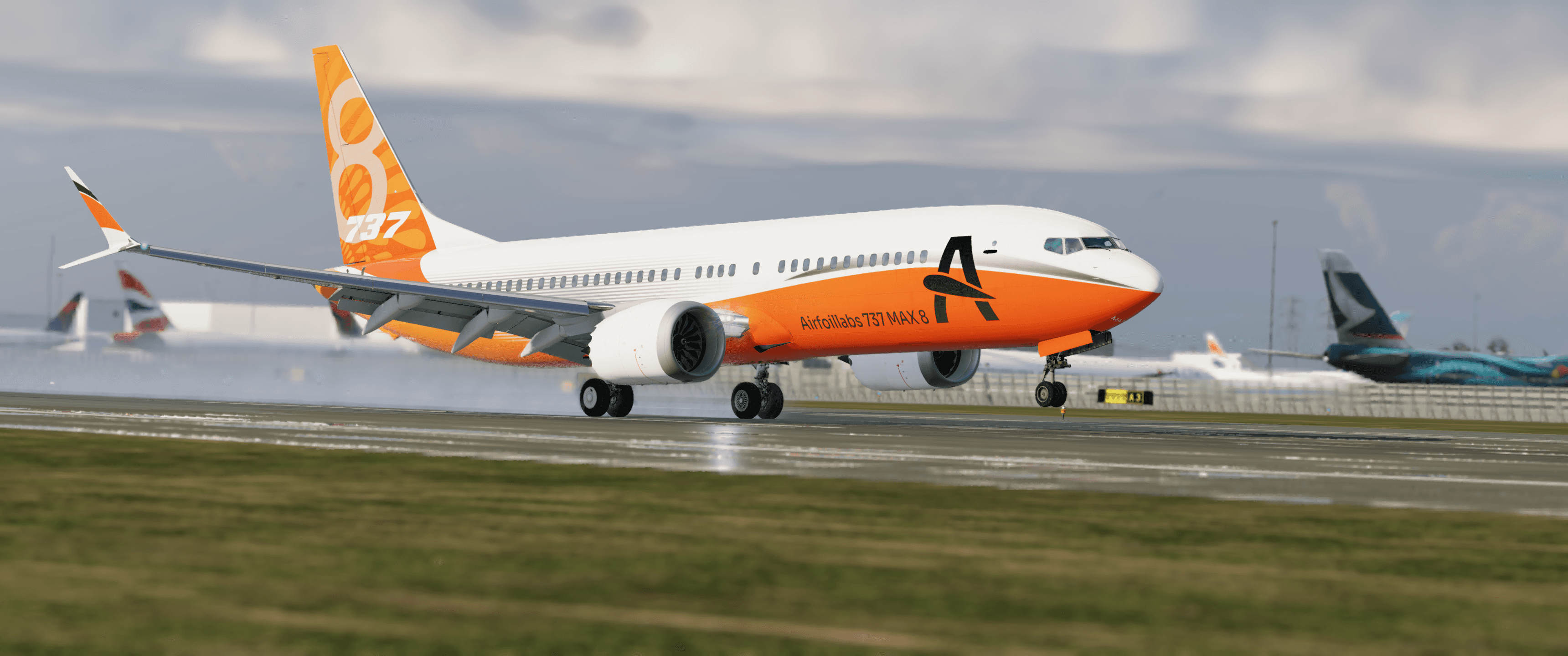
Not another 737 add-on
Most airliner add-ons simulate what you see: the needle moves, the light comes on, the display draws the right picture. We simulate “why” it happens.
In the AFL 737 MAX, the BAT DISCHARGE light doesn't come on because a failure menu told it to - it comes on because the electrical model measured net negative current at the battery. The hydraulic synoptic doesn't play an animation - it renders the live state of a fluid network with pumps, standpipes, shuttle valves, and a PTU that transfers real modeled power between systems. Pull a breaker, lose a bus, and every display unit, annunciator, and pump downstream responds because it is actually wired to that bus.
That's what study-level means to us: a machine you can learn, troubleshoot, and fly the way the real crews do.
Two people. The whole aircraft.
Airfoillabs is two developers in Brno, Czech Republic. That's the entire company.
Everything on this aircraft - the systems logic, the flight model, the FMS, the 3D modeling, the textures, the animations, the sounds, the EFB, even the support inbox - comes from the same two desks. No studio, no publisher, no outsourcing. The hands that wired the electrical buses are the hands that modeled the switches they power.
Working this way is slower. It's also why the aircraft holds together: there's no gap between the person who built the hydraulics and the person who built the synoptic that displays them, no spec document lost between departments. One aircraft, one standard, applied everywhere.
We've been building X-Plane aircraft this way for a decade - the King Air 350 and the C172 series carry our name. The 737 MAX is the aircraft those ten years were preparing us for.
Not entirely alone
Two pairs of hands - but not zero backing. From day one, this project has had the strong and steady support of X-Plane.org, our long-time partner, the home of our development hub, and the store where every Airfoillabs aircraft has been sold for the past decade. Their trust in this project, and in independent developers generally, is a big part of why a two-person team can attempt an aircraft of this scope at all.
We also owe a great deal to the X-Plane development team at Laminar Research, whose help and openness - the kind of direct access to the people building the platform that simply doesn’t exist elsewhere - lets us push the simulator as deep as this aircraft demands.
And to our fans and customers: thank you. Your feedback on every dev update - the corrections from real 737 crews, the sharp eyes catching what we missed, the encouragement when a milestone takes longer than we hoped - has shaped this aircraft more than you know. You are, quite literally, part of the development team.
Help us finish it
Over two years in, the aircraft is roughly 80% built towards first Beta Release. The remaining stretch - completing the FMS, autopilot integration, fuel and air systems, sound, and the long tail of testing - is the hardest part. Even with a strong partner behind us, an aircraft of this depth is an enormous undertaking for two people, and community support directly buys development time.
If you want this aircraft to exist, there are three ways to help, and every one of them matters:
Donate
Direct support that buys development time. No tiers, no promises we’d have to administer instead of building - just fuel for the project.
Subscribe
Follow the monthly dev updates. A large, engaged following is what convinces partners to back projects like this.

Under the skin
Electrical system - functionally complete
The full documented distribution: three generators, GPU, two batteries, three TRUs, standby power with static inverter, and ground service. DC and AC buses, cross-bus ties, transfer relays, RCCBs, and the hot battery bus are individual modeled components connected by lines - not lookup tables. The AC/DC metering panel shows live readouts for every selector position, with realistic warm-up and sample-and-hold behavior. Fail a TRU and watch the consequences propagate.
Master Warning & Caution System
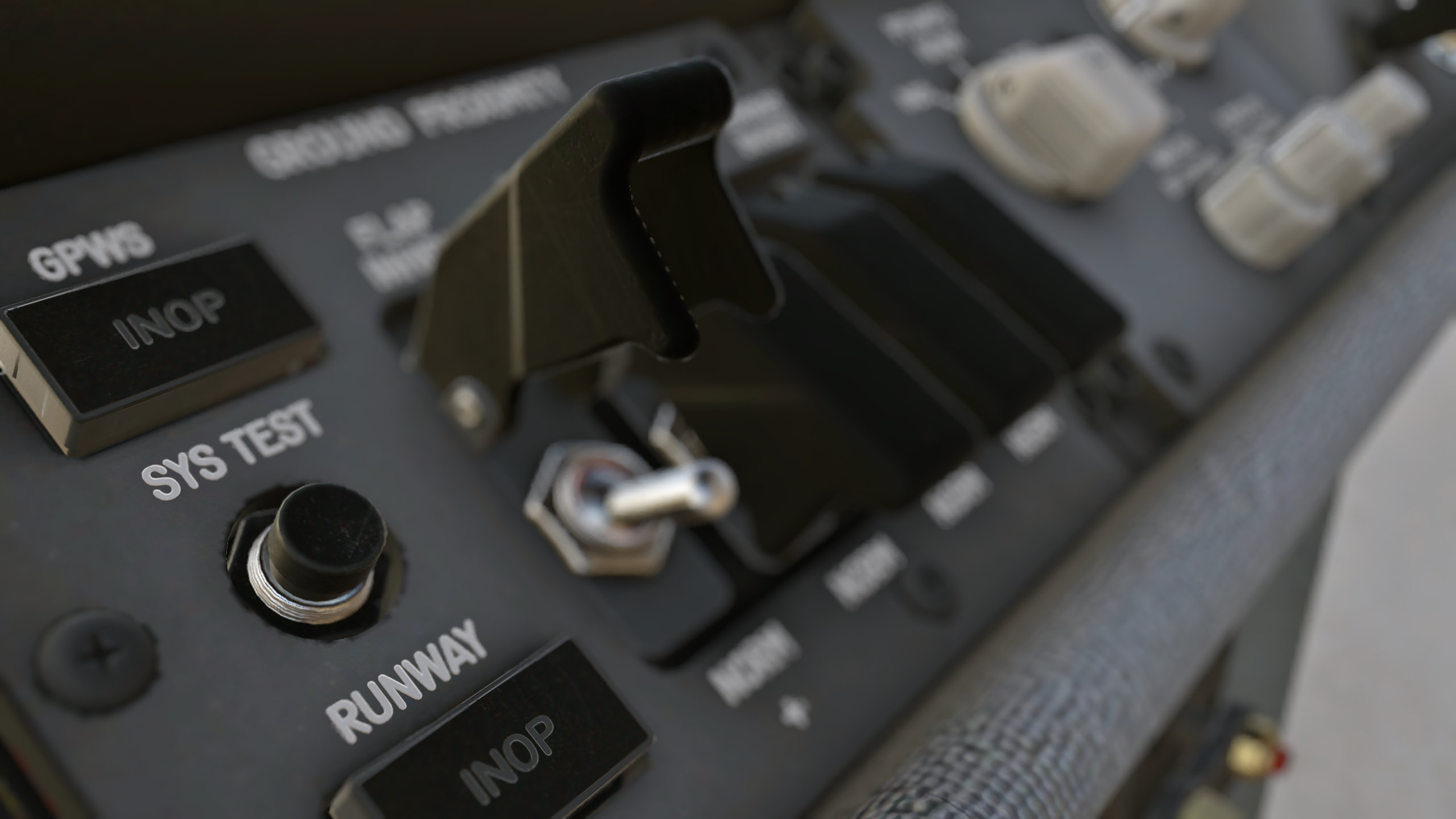
Fifteen master annunciators plus the six-packs, with press-to-test and recall - and fault detection driven by real component state: BAT DISCHARGE from net battery current, TR UNIT from actual TRU output, STANDBY PWR OFF, ELEC, DRIVE. Over 133 annunciators across five flight deck panel locations, each with unpowered logic and light-test behavior.
Hydraulics - a real fluid network
Systems A and B built from reusable components: reservoirs with level sensing, engine-driven and electric pumps, standpipes, shut-off valves, shuttle valves, and a power transfer unit. A network solver handles pressure, leaks, and fire shut-off - with the standby system in progress. Flown from the overhead panel switches and visualized live on the EFB synoptic.
LEAP-1B engines with full EEC/FADEC logic
Both LEAP-1B27 and LEAP-1B28 variants. Thrust management across TO, TO 1/2, D-TO, CLB, CLB 1/2, CRZ, G/A, CON, and MAN; Normal, Soft Alternate, and Hard Alternate EEC modes; four idle schedules (ground, flight, approach, icing). N1/N2 correlation, spool dynamics, oil and EGT behavior, and performance tuned as a function of Mach, altitude, and airspeed against real pilot report data.
FMS, VNAV & IRS
A custom FMS backend with lateral and vertical navigation built for airline procedures: performance-table calculations with real-time interpolation, LNAV/VNAV integration, and magnetic variation read from the Navigraph database. The Inertial Reference System is fully modeled - alignment state machine, motion detection, position validation, error model, and the complete ISDU interface with keypad entry and TEST sequence.
Six-screen glass cockpit + ISFD
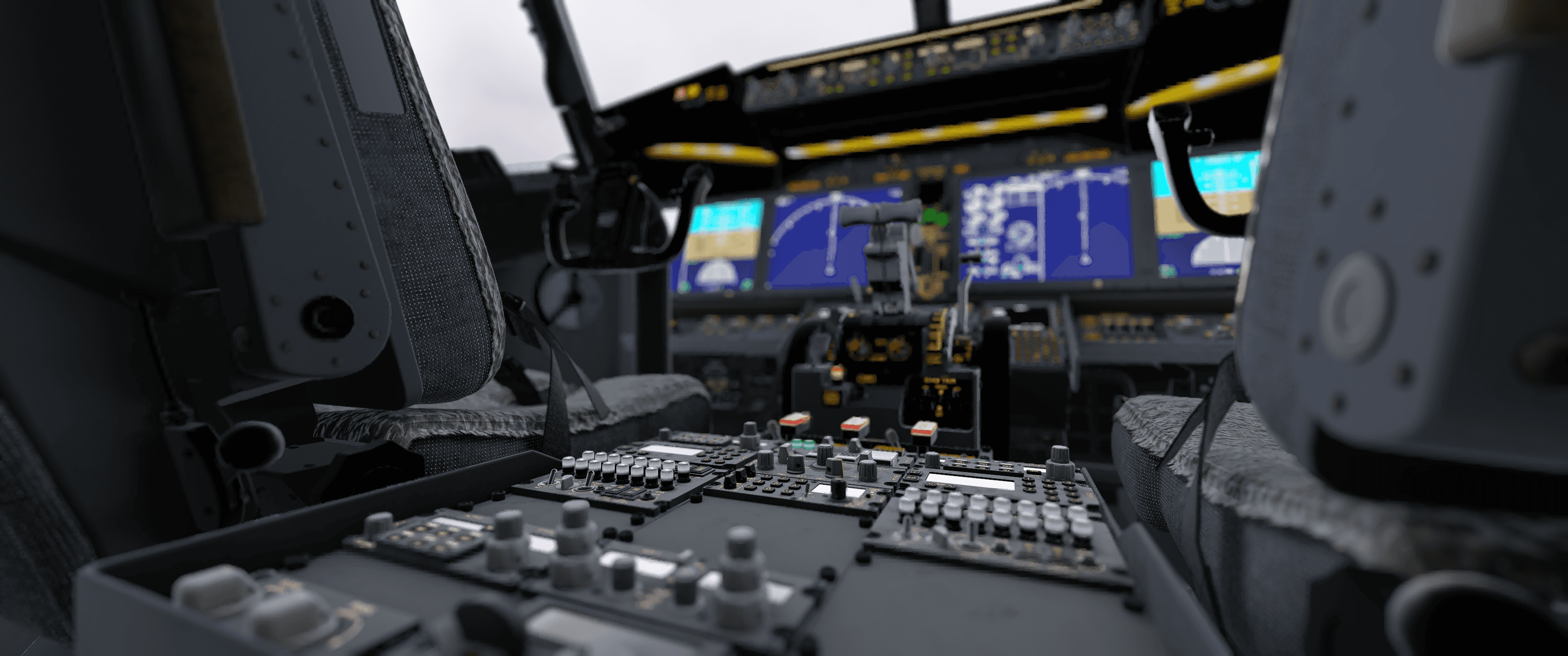
Display units are electrical consumers, mapped to their real buses, with correct power-down on bus failure, DPC 1/2 source logic, the Displays Source Panel and PFD/MFD switching for non-normals, per-unit brightness and contrast, and pixel-accurate custom fonts. The ISFD runs on independent power and sensors - as it must.
Flight model
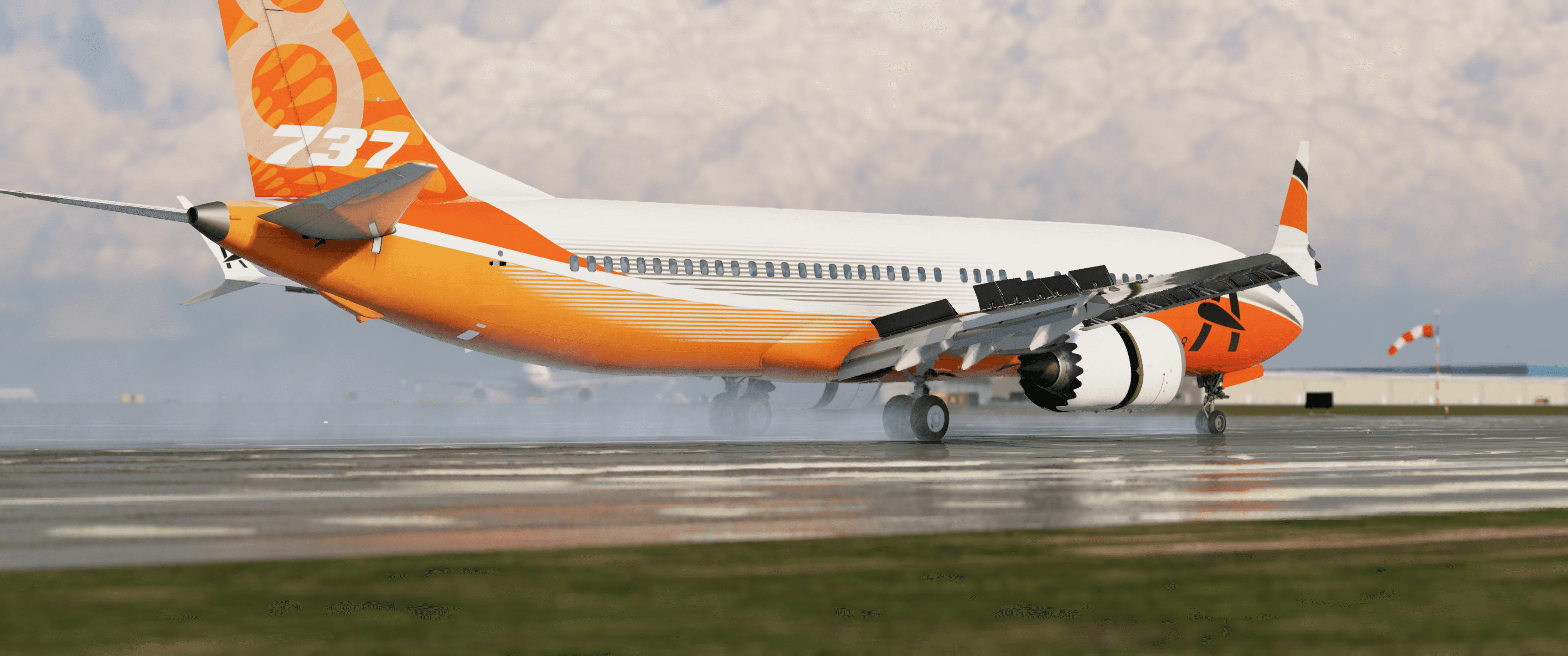
Physics-based, tuned airfoil by airfoil for clean-configuration performance across weight, altitude, and speed - climb, cruise, and descent verified against the performance model that drives VNAV. Speed Trim System, Mach Trim, and MCAS with all post-return-to-service safeguards. Spoiler effectiveness varies with airspeed and deflection; trim wheels spin at the correct rates with extendable handles.

Development you can watch
The full documented distribution: three generators, GPU, two batteries, three TRUs, standby power with static inverter, and ground service. DC and AC buses, cross-bus ties, transfer relays, RCCBs, and the hot battery bus are individual modeled components connected by lines - not lookup tables. The AC/DC metering panel shows live readouts for every selector position, with realistic warm-up and sample-and-hold behavior. Fail a TRU and watch the consequences propagate.
Our development hub lives on the X-Plane.org forums - the heart of the X-Plane community and the place where this project was announced, is discussed, and will be released. Read two years of dev updates, or watch the systems come alive on YouTube.
A Closer Look





The AFL 737 MAX is an independently developed flight simulation add-on created by Airfoillabs s.r.o. for personal entertainment and self-education within the X-Plane flight simulator platform. It has been developed using publicly available sources and references and does not incorporate any proprietary data, flight data packages, or confidential information from any aircraft manufacturer. “737” and “737 MAX” are aircraft type designations used solely for descriptive identification purposes. All trademarks belong to their respective owners. Airfoillabs s.r.o. is not affiliated with, endorsed by, or licensed by any aircraft manufacturer or OEM. This product is not a certified Flight Simulation Training Device (FSTD) or Aviation Training Device (ATD) under any jurisdiction and is not intended for pilot training or any real-world aviation application.